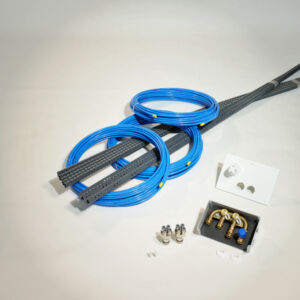
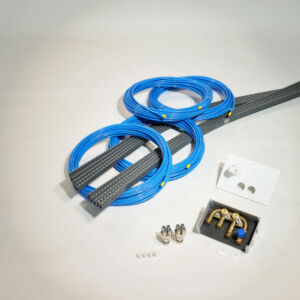
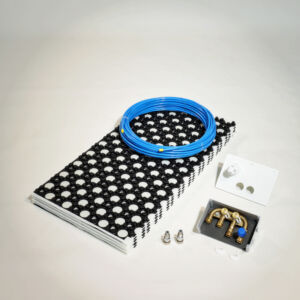
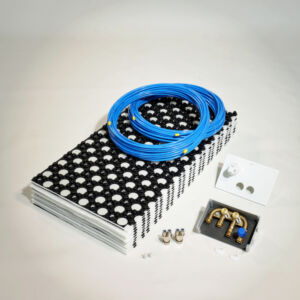
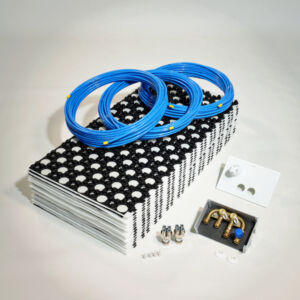
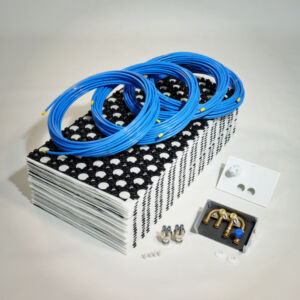
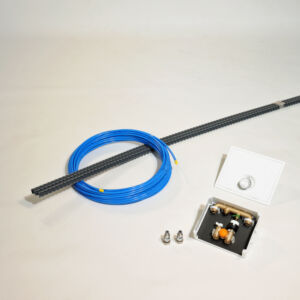
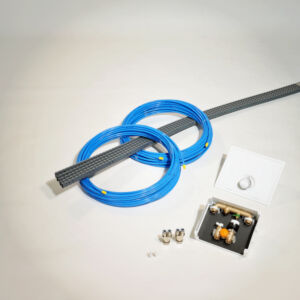
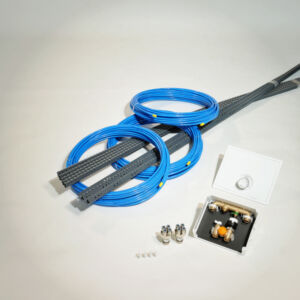
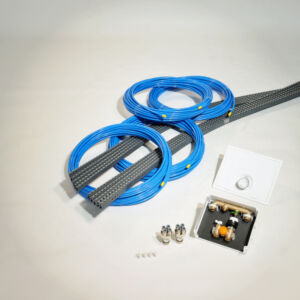
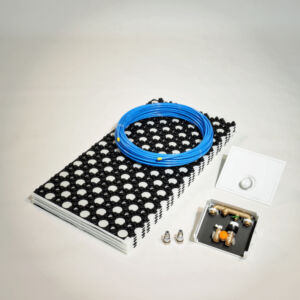
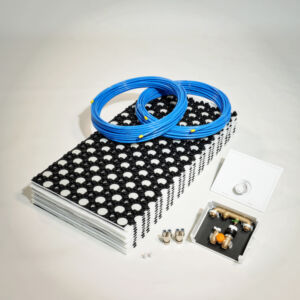
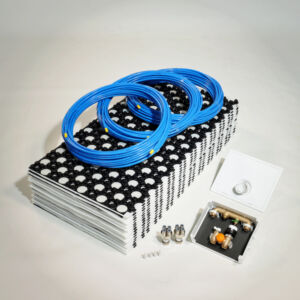
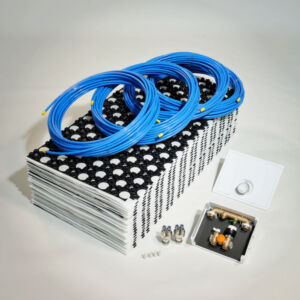
DIY Retrofit Low Profile Underfloor Heating
Full kits for modern heating comfort in existing and old buildings
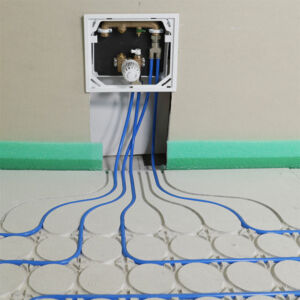
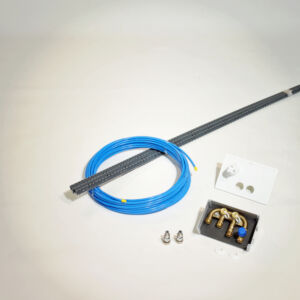
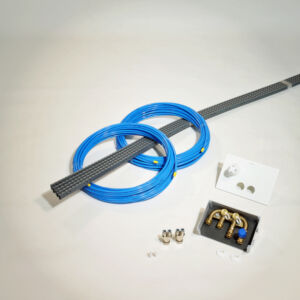
With a low installation height of 17 mm, our kits are the ideal solution for retrofitting warm water underfloor heating in individual rooms. There is no need to remove the existing floor.
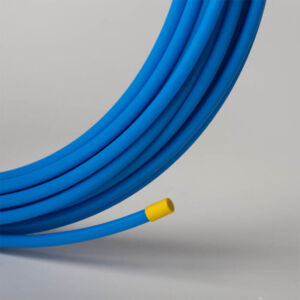
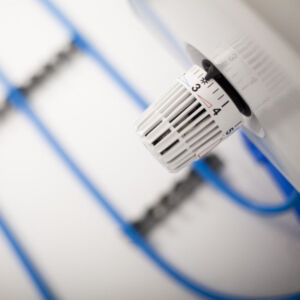
The low installation height is just one of the advantages of our thin underfloor heating system. The flexible 10 mm PE-RT composite pipe allows narrow loops to be laid close to the surface. This results in an even surface temperature and rapid heating performance. The desired room temperature can be achieved even at low flow temperatures. This has a positive impact on heating costs.
The system uses RTL technology to connect to all standard heating systems, including those with high water temperatures of up to 70°C. The kits are installed between the flow and return pipes. Existing radiators can be replaced or operated alongside the low profile system, as with a towel radiator in the bathroom. All installation steps are described in detail in our instructions.
As rooms are usually not fully covered with underfloor heating, a 10 m² kit is sufficient for 14 m² of floor space in most cases.
With FLEXIRO, you bring the comfort of warmth into your home, room by room.
-
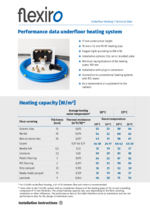
Technical data - Low profile wet underfloor heating kitHeating capacity for different surface materials and other technical information188 KB
-
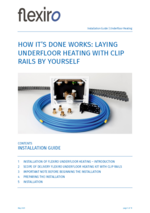
PDF Installation Manual - How to Fit a Low Profile Underfloor Heating with Clip RailsComprehensive DIY installation guidelines with all required information to retrofit a water underfloor heating system using clip rails.734 KB
-
PDF Installation Manual - DIY Underfloor Heating Kit with Stud PlatesComprehensive installation guidelines with all required information for retrofitting a low profile wet underfloor heating using stud plates.978 KB
question_exchange
Both installation methods allow for the safe and rapid installation of a low-profile underfloor heating system. Whether installing using clip rails or studded panels, it is essential to ensure that the subfloor has sufficient load-bearing capacity beforehand.
Clip rails are screwed to the subfloor and can accommodate unevenness, such as that found in wooden floors. Studded panels allow for flexible installation patterns and reduce the need for levelling compound. Here are the specific advantages of the installation methods in detail:
| Clip-on rail | Studded panel |
| Most cost-effective, simple installation method | The higher costs are partly offset by the reduced need for levelling compound |
| Tolerates uneven floors | Requires a level and dry substrate |
| Fixed with screws | Fixed using adhesive. In addition, a reinforcement mesh is pre-fitted underneath the studded panels at the factory |
| Medium drying time | Short drying time |
| Installation pattern: Meander | Laying pattern: Maximum flexibility. Spiral laying is also possible. |
| Additional dowel hooks are required for tight bending radii | Secure and even support for the heating pipes close to the surface |
The function of heat distribution plates is clear from their name. Thanks to the excellent thermal conductivity of the materials used – usually aluminium or galvanised steel – the plates transfer heat from the heating pipes to the floor surface. This ensures even heat distribution and minimises thermal bridges between the pipes. The use of heat conduction plates increases the energy efficiency and response speed of the underfloor heating system. The required thermal comfort is achieved at a lower heating water temperature, which offers further energy benefits, particularly when used in conjunction with heat pumps.
Heat conduction plates are mostly installed in combination with dry-build systems, as the materials used here, such as gypsum fibre, polystyrene or wood, have lower thermal conductivity compared to wet screed. In standard wet screed systems using screed concrete or cement screed as the casting compound, heat conduction plates are rarely used, as the concrete handles the heat distribution.
Heat conduction plates are also unnecessary for low profile underfloor heating systems, as the thin pipes used here can be laid at close intervals. Furthermore, laying the pipes close to the surface ensures direct heat transfer into the room via the floor covering.
These are the reasons why the thin-bed heating system is effective even without heat-conducting plates
Wet installation
Our 10 mm systems use special studded panels or clip rails to secure the pipes. This ensures that the heat-carrying pipes are fully enclosed by levelling compound. The levelling compound acts as a heat-conducting layer and ensures heat transfer directly to the floor covering. For these reasons, we also recommend using a levelling compound specifically designed for underfloor heating systems to embed the pipes in our OSB and dry screed systems.
Tight installation spacing
Due to the flexibility of the thin PE-RT pipes, which allow for small bending radii, they can be laid at tight intervals of 10 cm or less. As a result, the temperature difference at the floor surface between two pipes is so small that no metal plates are required for the cross-distribution of heat
Potential air pockets
Heat-conducting sheets can be problematic in very thin floor constructions. If the pipe does not fit perfectly within the sheet, insulating air pockets can develop, which have a negative impact on heating performance. In thin-layer systems, the direct bond between the pipe and the grouting compound is crucial for stability and heat conduction.
Acoustic risks
If heat-conducting plates are not absolutely firmly bonded to the pipe, they can expand when heated and cause noise (cracking).
If you have any project-related questions regarding the use of heat conductive plates, please feel free to contact our technical support team.
For structural calculations in the run-up to a house modernisation, it is sometimes necessary to know how much weight the underfloor heating will put on a floor. Of course, the weight depends on the individual floor structure and the materials used. Nevertheless, the weight of the FLEXIRO components can be calculated.
The levelling compound accounts for the majority of the total weight. The specific weight of a levelling compound is typically between 1.6 and 1.8 kg/m² per 1 mm layer thickness. With a construction height of 17 mm, an estimated weight of approx. 26 kg/m² can be expected. The underfloor heating itself adds only approx. 1.9–2.2 kg/m², even when filled with water. Therefore, the thin-layer system is much lighter than a standard underfloor heating system where the heating screed must be included in the calculation.
FLEXIRO meets the Trusted Shops quality criteria
- Certified since 2013
- 30 days buyer protection through Trusted Shops
- More than 400 positive reviews